
Augusto Pinochet’s Anti-Communist Worldview
My Tender MatadorThis flow traces how anti-Communist suspicion informs Augusto Pinochet’s judgments of protest, sexuality, and political violence.
increasing Bearing strength in each event
 decreasing
Bearing strength in each eventdecreasingBlaming the Broadcaster
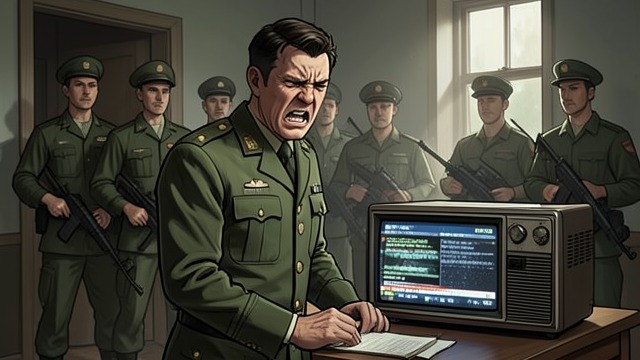
A Convenient Enemy
The Radio as a Target
Augusto Pinochet regards Radio Cooperativa as a hostile voice that turns ordinary people into rebels. He treats criticism as subversion rather than evidence of public grievances.
Politics Reduced to Disloyalty
This interpretation lets him avoid examining the causes of protest. By defining dissent as betrayal, he makes repression appear to himself like necessary protection.
Disdain for Protesters
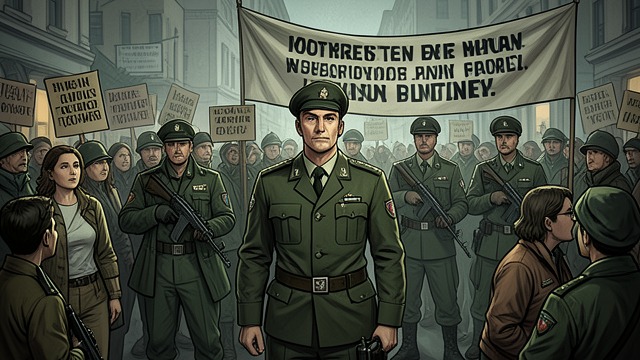
Order Against Dissent
The Protesters as Threat
Augusto Pinochet imagines demonstrators as lazy troublemakers and celebrates workers who appear to support the government. His view divides citizens into loyal subjects and enemies.
The Force Behind the Image
The same government that praises obedience uses police and soldiers to break up demonstrations. The gap between official virtue and coercive practice exposes the political logic of the regime.
The Cadet Expelled
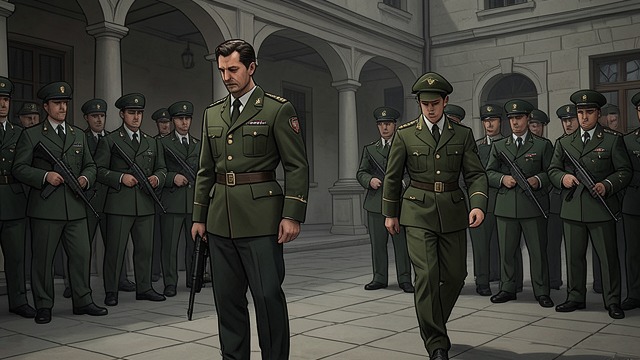
Queerness Marked as a Plague
A Young Soldier Watched
Augusto Pinochet observes a cadet and interprets his manner as evidence of homosexuality. He calls the young man a danger to military discipline, linking queer identity with contamination.
Authority Enforces Exclusion
He orders the cadet removed from the property and discharged. The decision exposes how prejudice becomes material punishment when backed by military command.
The Attack Reframed as Treachery

Violence in Both Directions
The Ruler Under Fire
The Front’s ambush makes Augusto Pinochet experience the danger his regime has imposed on others. He survives, but cannot control how fully the attack overturns his sense of safety.
Revenge and Denial
Afterward, he condemns his opponents as criminals and remembers the violence of the coup as justified. His response shows how anti-Communism converts political conflict into a license for escalating force.
A State Built on Fear
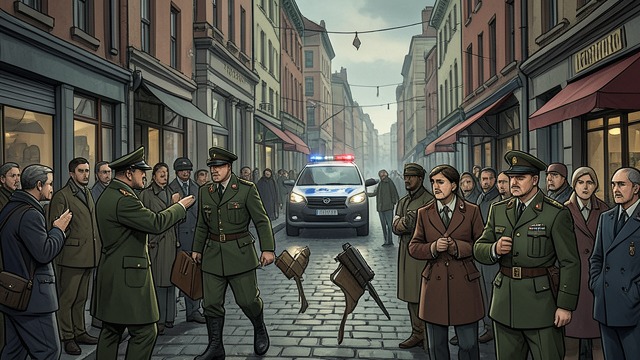
Suspicion Spreads
A City Under Control
Military searches treat hesitation and association as grounds for suspicion. Residents face coercion as the state attempts to locate the attackers and restore its authority.
No Settled Victory
The Front’s escape and the population’s continued resistance undermine the promise that force can permanently settle political disagreement. Anti-Communist certainty produces more fear than security.
During the early spring retreat
During the spring demonstrations
During the weekend at the mountain residence
Immediately after September 11, 1986
During the post-ambush searches in Santiago
